

Electrostatic Separator
Henan Forchen Machinery Co., Ltd is a professional manufacturer and supplier of scrap metal and plastic recycling machines. Since its establishment in the year 2000, Forchen Machinery owns a sales team and production center which are located in Henan and Zhejiang province.
Our factory covers an area of over 20000 square meters, and it is under the management of an experienced team which mainly includes the factory manager, technical department, production department, QC department.
Forchen Machinery mainly supplies the following products: copper wire granulator, cable stripping machine, motor recycling machine, radiator recycling machine, PCB recycle machine, car recycle machine, metal crusher and related accessory equipment. We also provide complete recycling line designing and planning, equipment installation, staff training and regular visiting for domestic and overseas clients.
Forchen has achieved certification of CE, SGS and ISO 9001 for all products and management systems.
Forchen has international advanced CNC laser cutting machines, CNC lathes, shearing bending machines, CNC punch, cutting, drilling, boring machine, and other processing equipment to carry out all kinds of precision manufacturing.
Since our inception, Forchen has rich experience in the recycling field and has been providing products and services to more than 50 countries all over the world. Overseas annual sales is over 10million dollars and keep increasing year by year.
Why Choose Us?
High quality
Our products are manufactured or executed to very high standards, using the finest materials and manufacturing processes.
Competitive Price
We offering a higher-quality product or service at an equivalent price. As a result we have a growing and loyal customer base.
Rich experience
Our company has many years of production work experience. The concept of customer-oriented and win-win cooperation makes the company more mature and stronger.
Global shipping
Our products support global shipping and the logistics system is complete, so our customers are all over the world.
DAfter-sale service
Professional and thoughtful after -sales team, let you worry about us after -sales Intimate service, strong after -sales team support.
Advanced equipment
A machine, tool or instrument designed with advanced technology and functionality to perform highly specific tasks with greater precision, efficiency and reliability.
-
 Electrostatic Separator Machine1. Electrostatic separator machine application: metal and nonmetal separation. . 2. Separating principle: high voltage static electricity. . 3. Separating rate: more than 99%Add to Inquiry
 -
 High Voltage Electrostatic Metal Plastic Separator1. Process capacity of electrostatic metal plasic separator: 100-600kg/h . 2. Purity of output material: more than 99.8%. 3. Working method: dry type separating.Add to Inquiry


- Mob: +8615313051092
- sales@forchenmachine.com
- Add: No.2106, Henan Chamber of Commerce Building, Fulu Street, Zhongxing Rd, Henan, China
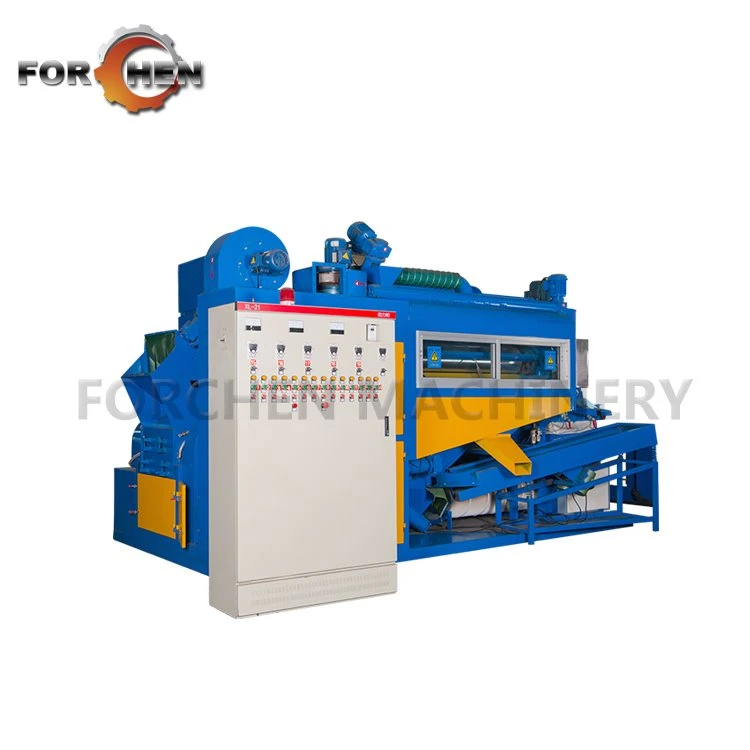
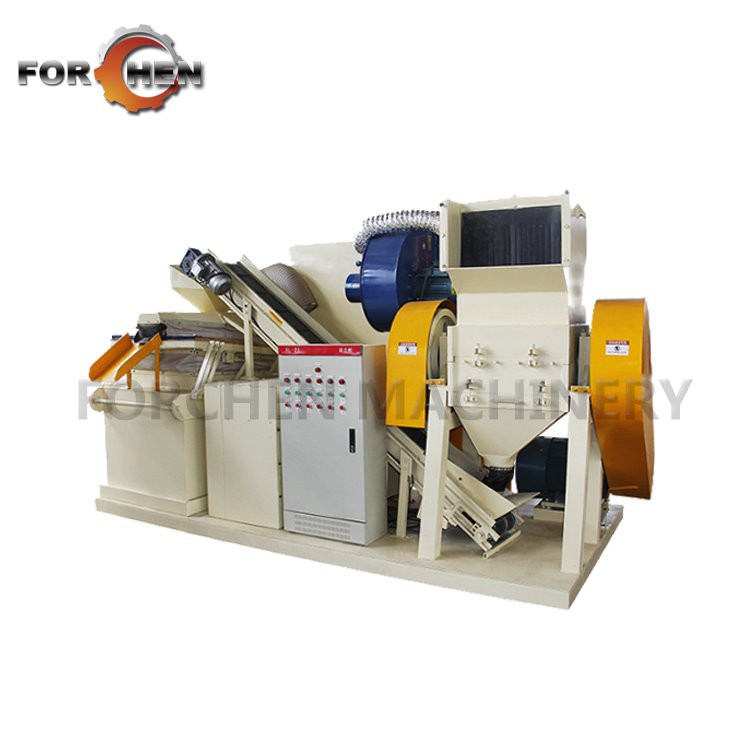
The electrostatic separator smashes the mixed materials, and can separate metals such as copper and aluminum by utilizing the different electrification characteristics of metals and plastics. This machine is suitable for the processing of metal-filled composite materials, cable materials and metallized plastics.
Electrostatic separator is to separate conductive substances from non-conductive substances through high-voltage static electricity, and separate metal and non-metal in circuit boards. It is mainly used for waste circuit boards, various medicine boards, aluminum-plastic boards, food packaging bags, aluminum Plastic tube, aluminum foil and other metals. Electrostatic separation equipment is an important part of circuit board recycling equipment.
What is Electrostatic Separator?
An electrostatic separator is a device that uses an electric field to separate particles based on their charge and size. It operates on the principle that different materials can be made to carry different amounts of static charge, which can then be exploited to achieve separation.
High efficiency: Electrostatic separators can achieve a high degree of purity in the separated materials, which is critical for downstream processes and end products. They are capable of extracting even small quantities of valuable materials from large volumes of mixed waste or ore.
Selective sorting: The ability to separate materials based on their electrical properties allows for precise sorting. This selectivity ensures that similar materials are grouped together, which is important for recycling and reuse.
Energy efficiency: Once set up and running, electrostatic separators require relatively little energy to operate compared to other separation methods such as mechanical or thermal processes.
Low environmental impact: Since electrostatic separation does not involve the use of chemicals, heat, or other potentially harmful substances, it minimizes environmental pollution and health risks associated with the separation process.
Versatility: Electrostatic separators can handle a wide range of material types, from fine powders to larger lumps, making them suitable for a variety of applications. They can be used to sort non-conductive materials like plastics and glass, as well as conductive ones like metals.
Cost savings: By efficiently recovering valuable materials from waste streams or ore, electrostatic separators can help reduce the need for raw material extraction, leading to cost savings and a reduction in the overall carbon footprint.
Automation: These separators can be integrated into automated systems, allowing for continuous operation and improved throughput without the need for manual labor, which reduces operational costs and increases safety.
Compact design: Many electrostatic separators are designed to be compact, making them space-efficient and easy to incorporate into existing production lines or facilities.
Enhanced product value: The high purity of the sorted materials means that they can often be sold at a higher value than if they were part of a mixed batch, thereby increasing revenue for businesses.
Reduced waste: By effectively separating recyclable materials from waste, electrostatic separators contribute to waste reduction and diversion from landfills, supporting sustainability goals.
Triboelectric separators
These devices use friction between materials to induce a charge. When two different materials come into contact and are then separated, one may become positively charged, and the other negatively charged. Triboelectric separators are commonly used for sorting plastics and are effective for materials that can be charged by contact.
Corona chargers
In these separators, a high-voltage corona discharge is used to charge particles as they pass near sharpened electrodes. This method is suitable for both conductive and non-conductive materials and is widely used for sorting metals from non-metals.
Roller electrostatic separators
These separators use rotating drums or belts covered with a conductive material that charges particles as they pass over the surface. The charged particles are then deflected by an electric field onto collection plates. Roller separators can be used for both dry and moist materials.
Plate electrostatic separators
These separators consist of parallel plates with high-voltage electrodes. As the charged particles pass between the plates, they are attracted to plates of the opposite charge, where they are collected. Plate electrostatic separators are particularly effective for fine particles.
Hydrocyclones with electrostatic precipitators
These combine the centrifugal force of hydrocyclones with the electrical forces of electrostatic precipitators to separate fine particles from gases or liquids. This type is common in air pollution control and dust collection applications.
Electrostatic drum separators
Similar to roller electrostatic separators, these use a drum rotating in a magnetic field to induce a charge on the particles. The charged particles are then attracted to plates of the opposite charge located within the drum.
Ionizing air classifiers
These separators use ionizing air to charge particles as they flow through the classifier. The charged particles are then separated by an electric field. This type is suitable for fine particles and is often used in the mining industry for separating valuable minerals.
Application of Electrostatic Separator
Mineral processing
In mineral extraction, electrostatic separators are used to concentrate ores and separate valuable minerals from waste rock (gangue). For example, they are employed to separate tin from quartz or to recover diamonds from gravel.
Recycling
The recycling industry heavily relies on electrostatic separators to sort and recover valuable materials from electronic waste (e-waste), plastics, and metals. They help in extracting copper, aluminum, and precious metals from circuit boards and other electronic components.
Waste management
In municipal solid waste (MSW) treatment plants, electrostatic separators can be used to recover metals and other materials from the waste stream. This helps in reducing the volume of waste sent to landfills and promotes resource recovery.
Manufacturing
In manufacturing, these separators can be used to remove dust and particulates from air or gas streams, ensuring cleanliness and product quality. They are also used in the textile industry to separate fibers and remove impurities.
Agriculture
Electrostatic separators are used in agriculture to sort seeds based on size, shape, and electrical properties. This ensures uniform planting and improved crop yields.
Pollution control
In industrial settings, electrostatic precipitators (ESPS) are used to remove particulate pollutants from exhaust gases before they are released into the atmosphere. They are particularly effective in controlling emissions from power plants, cement factories, and steel mills.
Pharmaceuticals
In the pharmaceutical industry, electrostatic separators are utilized to sort and purify tablets and pills, ensuring consistent dosages and quality control.
Automotive
The automotive industry employs these separators to recycle metal shavings and particles generated during manufacturing processes, which can be reused as feedstock for new parts.
High-voltage power supply: This provides the necessary electrical energy to create an electric field strong enough to charge particles and exert a force sufficient for separation. The power supply must be stable to maintain consistent charging and separation efficiency.
Charging unit: Also known as the corona charger, this unit generates a corona discharge near sharpened electrodes or wires. As particles pass through this region, they become charged by either direct contact with the charged surfaces (triboelectric charging) or by ions produced in the corona discharge (induction charging).
Electrode assembly: This assembly consists of a series of plates or cylinders that create the electric field through which charged particles travel. The configuration of the electrodes determines the path and speed of the particles, influencing the separation process.
Collection system: Once the particles are charged, they are directed towards collection plates or containers of the opposite polarity. The charged particles adhere to these plates due to electrostatic attraction. The collection system must be efficient to prevent recontamination of the separated materials.
Insulators: Insulators are used to isolate the electrodes and prevent electrical current from flowing through the separator, ensuring that the electric field is maintained only where it is intended.
Conductive material: Often, a belt or drum coated with a conductive material is used to transport the particles through the charging unit. This conductive layer ensures that the particles are evenly charged and that any built-up static charge is dissipated.
Control system: Modern electrostatic separators may include a control system that allows operators to adjust parameters such as voltage, current, and the timing of charging and separation. This can optimize performance for different materials and applications.
Dust collection system: Since the charging process can generate dust, a dust collection system is often included to capture these particles and prevent environmental contamination.
Feeder mechanism: The feeder mechanism introduces the material to be separated into the electrostatic separator. It can be designed to handle various flow rates and particle sizes.

Stainless steel: Stainless steel is commonly used for the electrodes and collection plates due to its excellent electrical conductivity, resistance to corrosion, and mechanical strength. Types like 304 or 316 stainless steel are often preferred for their non-reactive nature and ease of cleaning.
Aluminum: Aluminum is another material used for electrodes, especially in cases where weight is a concern, such as in portable units. It is lightweight, has good electrical conductivity, and is relatively inexpensive.
Polyvinyl chloride (PVC) and other plastics: PVC and other plastics are used for insulators and some components of the housing due to their insulating properties, low cost, and resistance to chemicals and weather.
Rubber: Rubber or silicone materials are sometimes used for belts or drums that convey the material being separated. These materials have good flexibility, can withstand friction, and are resistant to abrasion.
Glass: Glass fibers can be used as insulators due to their high dielectric strength and resistance to heat.
Teflon (PTFE): Teflon is used for certain parts that come into contact with the material being processed, as it is chemically inert and has low friction.
Carbon fiber: Carbon fiber is used for components requiring high strength and light weight, although it is less common due to cost.
Nylon and other synthetic fibers: These are used for belts, filters, and other parts where wear resistance and flexibility are important.
Feeding: The heterogeneous mixture of materials enters the separator through the feeding mechanism. This could be a conveyor belt, a rotating drum, or a hopper that introduces the material into the separator at a controlled rate.
Triboelectric charging: As the material passes through the charging zone, it comes into contact with a charging element—often a corona wire or a brush—which imparts an electrical charge to the particles. The type of charge (positive or negative) acquired by the particles depends on their triboelectric series, which ranks materials according to their tendency to gain or lose electrons.
Electrostatic deflection: After being charged, the particles enter the electrostatic deflection zone, also known as the separation chamber. Here, a strong electric field is established by a series of high-voltage electrodes. The charged particles are deflected towards one of the electrodes based on their charge polarity. Positively charged particles move toward negatively charged electrodes and vice versa.
Collection: Particles that are attracted to the electrodes are collected onto them. This could be achieved through a system of conductive plates or a grounded surface. The collected material is then removed periodically from the electrodes.
Neutralization: To prevent the build-up of excess charge on the particles, neutralizing elements may be introduced to counteract the charge before the particles exit the separator. This ensures that the uncharged particles do not stick to the collecting electrodes and can be carried away by the conveyance system.
Recycling or discharge: Uncharged particles continue on their path and may be recycled back into the system or discharged as waste, depending on the setup of the separator and the requirements of the process.
Maintenance and cleaning: Regular maintenance and cleaning of components like the electrodes, charging elements, and collecting surfaces are necessary to ensure optimal performance. Build-up of material on these surfaces can reduce the efficiency of the separation process.
Throughout the process, parameters such as the applied voltage, the flow rate of the material, and the intensity of the electric field must be carefully controlled to achieve effective separation. Advanced separators might include sensors and control systems that allow for real-time adjustments based on feedback from the material being processed.
Electrostatic separation is particularly useful for recovering fine particles of conductive materials from non-conductive or weakly conductive matrices. Common applications include the separation of metals from plastic or glass waste, the sorting of electronic scrap, and the removal of impurities from mineral ores.
How to Maintain Electrostatic Separator
Inspection of electrodes: Regularly inspect the electrodes for signs of wear, damage, or material build-up. Any deposits should be gently cleaned with appropriate solvents to prevent a decrease in the electric field strength.
Cleaning of collection surfaces: Collecting electrodes and other surfaces that come into direct contact with the material being processed should be cleaned regularly to remove any accumulated dust, dirt, or adhered particles. This can typically be done using compressed air or a soft brush.
Corona wire maintenance: The corona wire is responsible for charging the particles. It should be inspected for burns, discoloration, or thinning. If necessary, replace the corona wire to maintain efficient charging.
Ionizer bar maintenance: Ionizer bars should be checked for any visible damage or contamination. They can be cleaned with a lint-free cloth and, if needed, recharged or replaced to ensure proper function.
High-voltage supply check: The high-voltage supply should be checked regularly for stability and correct output. Voltage levels that are too high or too low can affect the separator's performance.
Belt inspection and replacement: If the separator uses a belt or conveyor system, inspect it for wear, alignment, and tension. Belts may need to be tightened or replaced to prevent slippage or misalignment.
Preventative maintenance schedule: Establish a preventative maintenance schedule based on manufacturer recommendations and operational experience. This schedule should include all the above tasks and any additional procedures specific to the model of separator.
Training personnel: Ensure that personnel operating and maintaining the separator are trained on the correct procedures. Proper handling and cleaning techniques can significantly extend the life of the equipment.
Safety checks: Always follow safety protocols when performing maintenance on the separator, including ensuring that the equipment is powered off and properly grounded before any work begins.
Record keeping: Keep detailed records of all maintenance activities, including dates, times, actions taken, and any parts replaced. This information can help identify trends and potential issues before they become major problems.
Material characteristics: Analyze the physical and chemical properties of the material to be separated, including particle size, shape, density, and electrical conductivity. This will help determine the most suitable type of separator (e.g., triboelectric or corona discharge) and the required configuration.
Separation efficiency: Consider the level of purity required for the final product. Electrostatic separators can achieve high purity for conductive materials, but the efficiency can vary depending on the material mix and the separator’s design.
Throughput requirements: Determine the volume of material that needs to be processed per hour or shift. Different models of separators have varying capacities, and selecting a unit that is too small can lead to bottlenecks, while choosing one that is too large can result in unnecessary costs.
Operational costs: Evaluate the energy consumption, maintenance costs, and replacement part expenses associated with different separators. A more energy-efficient model may have higher upfront costs but lower long-term operating costs.
Equipment reliability: Research the reputation of the manufacturers and look for models that have a track record of reliability and minimal downtime. Reliable equipment can contribute to smoother operations and reduced maintenance expenses.
Ease of operation and maintenance: Consider the simplicity of the control systems and the accessibility of components for routine maintenance. User-friendly controls and easily accessible electrodes can simplify training and reduce maintenance time.
Environmental regulations: Ensure that the separator complies with local environmental regulations regarding emissions and waste disposal. Some models may incorporate features to reduce particulate emissions or recycle air within the system.
Scalability: If future increases in capacity are anticipated, select a separator that can be easily expanded or upgraded. Modular designs can provide flexibility for future growth without the need for a complete system overhaul.
Technology advancements: Stay informed about the latest technological advancements in electrostatic separation technology. Innovations such as improved charging methods, advanced materials for electrodes, and enhanced collection systems can lead to better performance and efficiency.
Supplier support: Choose a supplier that offers comprehensive support, including installation, training, technical assistance, and after-sales service. Good customer support can be crucial for maximizing the lifespan and performance of the separator.
What Are the Trends and Development Directions of Electrostatic Separator in the Market


Increased automation: There is a growing trend towards automating electrostatic separators. By integrating advanced sensors, AI, and machine learning algorithms, operators can optimize the separation process in real-time, leading to enhanced performance and cost savings.
Miniaturization and portability: As technology progresses, there is a push towards creating smaller and more portable electrostatic separators. This allows for on-site separation of materials, reducing transportation costs and the carbon footprint associated with long-distance transport.
Enhanced energy efficiency: Energy consumption is a critical factor in the operation of electrostatic separators. Current developments focus on reducing energy use through improved electrode designs, better insulation, and more efficient power supplies.
Material science innovations: Advances in material science contribute to the development of new materials for electrodes and insulators that enhance durability, reduce maintenance, and improve separation performance.
Integration with other technologies: Electrostatic separation is often combined with other technologies such as magnetic or optical sorting. This integration improves the overall efficiency of the sorting process and expands the range of materials that can be effectively separated.
Customization and specialization: To meet the diverse needs of various industries, electrostatic separators are being customized and specialized for specific applications. This tailoring can result in higher efficiency and better separation outcomes for particular materials or industry requirements.
Environmental regulations: Stricter environmental regulations are pushing companies to invest in more efficient separation technologies. Electrostatic separators that can help reduce waste and increase recycling rates are becoming increasingly important.
Sustainability and recycling: There is a global emphasis on sustainability, which drives the demand for technologies capable of recycling and reclaiming valuable materials from waste streams. Electrostatic separators play a key role in this by enabling the recovery of materials like precious metals and plastics.
Scalability: The ability to scale electrostatic separation technology to handle both small-scale operations and massive industrial processes is a significant development direction. This scalability is crucial for accommodating varying market demands and production volumes.
Research and development (R&D) investment:Continuous investment in R&D is vital for innovation in electrostatic separation technology. Companies and governments are investing in research to improve existing techniques and develop new methods for material sorting and separation.
Triboelectric and corona discharge separators are two distinct types of electrostatic separation technologies used to separate materials based on their electrical properties. Here's a detailed comparison of the two:
Triboelectric separators:
●Principle of operation: Triboelectric charging occurs when two different materials come into contact and then separate. Due to differences in their electron affinities, one material will lose electrons (becomes positively charged) and the other will gain electrons (becomes negatively charged).
●Charging mechanism: The triboelectric effect is a contact electrification phenomenon where the transfer of electrons between materials leads to charge separation.
●Application: These separators are commonly used for separating dry, non-conductive materials like plastics, glass, and textiles. They are also used in the mining industry for separating minerals based on their triboelectric properties.
●Energy requirement: Triboelectric separators typically require less energy compared to corona discharge separators because they do not rely on high-voltage discharges to charge particles.
●Maintenance: They generally require less maintenance due to the lack of high-voltage components.
Corona discharge separators:
●Principle of operation: In a corona discharge separator, a high-voltage electric field is used to ionize air molecules, creating charged ions. These ions then collide with the particles being separated, imparting charge to them.
●Charging mechanism: Charging occurs through the ionization of air molecules in a corona discharge zone, which results in the formation of positive and negative ions. These ions are then attracted to particles with the opposite charge.
●Application: Corona discharge separators are particularly effective for separating conductive and semi-conductive materials, such as metals and certain types of ore.
●Energy requirement: These separators typically require more energy because they need to generate and maintain a high-voltage electric field to create the corona discharge.
●Maintenance: Corona discharge separators may require more maintenance due to the high voltages involved, which can lead to wear and potential breakdown of components.
What Is the Difference Between Triboelectric and Corona Discharge Separators?
Particle size and distribution: Smaller particles tend to carry a higher surface charge relative to their mass, which can improve separation efficiency. However, very fine particles may not be efficiently collected due to their tendency to follow air currents or become trapped in the separator's components. Particle size distribution impacts the separator's ability to handle different sizes effectively.
Particle shape and surface texture: Irregularly shaped or rough-surfaced particles can charge more effectively than smooth, spherical ones because they provide more surface area for contact and interaction with the charging medium.
Material properties: The electrical conductivity, dielectric constant, and triboelectric series position of the materials being separated significantly affect the charging and separation processes. Conductive materials are challenging to charge and may require pre-treatment or a different type of separator.
Separator design: The configuration of the separator, including the geometry of the electrodes, the distance between them, and the flow pattern of the material through the separator, can all influence efficiency. Proper design ensures optimal charging and collection of particles.
Operating voltage: The voltage applied to the electrodes must be sufficient to charge the particles effectively and overcome any resistive forces in the system. However, excessively high voltages can cause particle recombination and arcing, which can decrease efficiency.
Environmental conditions: Humidity, temperature, and atmospheric pressure can affect the efficiency of an electrostatic separator. For example, high humidity can neutralize charges on particles, while extreme temperatures can alter material properties and affect charging.
Feed rate: The rate at which material is fed into the separator affects the time available for particles to be charged and the opportunity for them to be collected. Higher feed rates can lead to lower separation efficiency if the charging and collecting mechanisms cannot keep up with the increased volume of material.
Collection efficiency: The design and efficiency of the collection system, whether it's a plate, tube, or wire, determine how effectively charged particles are captured. Collection surfaces must be regularly cleaned to prevent buildup and maintain efficiency.
System maintenance: Regular cleaning and maintenance of the separator's components, such as the collection plates and electrodes, are essential to prevent charge leakage and ensure maximum separation efficiency.
Pre-treatment and conditioning: Materials may require pre-treatment to enhance their chargeability or conditioning to achieve a more uniform size distribution before entering the separator.
Our Factory
Henan Forchen Machinery Co.,Ltd is professional manufacturer and supplier of scrap metal and plastic recycling machine. Since establishment on year of 2000, Forchen Machinery owns sales team and production center which are located in Henan and Zhejiang province. Our factory covers area of over 20000 square meters, and it is under management of experienced team which mainly includes factory manager, technical department, production department, QC department.

FAQ
Q: What is an Electrostatic Separator?
Q: How Does an Electrostatic Separator Work?
Q: What Materials Can Be Processed by an Electrostatic Separator?
Q: What is the Difference Between Triboelectric and Corona Discharge Separators?
Q: Why is Electrostatic Separation Used?
Q: What Factors Affect the Efficiency of an Electrostatic Separator?
Q: What is the Typical Size Range of Particles That Can Be Separated?
Q: Can Electrostatic Separators Handle Wet or Moisture-Laden Materials?
Q: What is the Role of the High-Voltage Supply in an Electrostatic Separator?
Q: How are Collected Particles Recovered?
Q: What Safety Precautions Should be Taken When Operating an Electrostatic Separator?
Q: How is an Electrostatic Separator Cleaned and Maintained?
Q: What is the Lifespan of an Electrostatic Separator?
Q: Are Electrostatic Separators Environmentally Friendly?
Q: What are Some Applications of Electrostatic Separation in Industry?
Q: What is the Cost of an Electrostatic Separator?
Q: Can Electrostatic Separation be Combined with Other Separation Techniques?
Q: What is the Impact of Particle Size Distribution on Separation Efficiency?
Q: How is the Charging Mechanism Selected for an Electrostatic Separator?
Q: What is the Importance of Grounding in Electrostatic Separation?
As one of the most professional electrostatic separator manufacturers and suppliers in China for over 20 years, we're featured by good service and competitive price. Please rest assured to wholesale high quality electrostatic separator for sale here from our factory.
