

Wire Stripper Machine
Henan Forchen Machinery Co., Ltd is a professional manufacturer and supplier of scrap metal and plastic recycling machines. Since its establishment in the year 2000, Forchen Machinery owns a sales team and production center which are located in Henan and Zhejiang province.
Our factory covers an area of over 20000 square meters, and it is under the management of an experienced team which mainly includes the factory manager, technical department, production department, QC department.
Forchen Machinery mainly supplies the following products: copper wire granulator, cable stripping machine, motor recycling machine, radiator recycling machine, PCB recycle machine, car recycle machine, metal crusher and related accessory equipment. We also provide complete recycling line designing and planning, equipment installation, staff training and regular visiting for domestic and overseas clients.
Forchen has achieved certification of CE, SGS and ISO 9001 for all products and management systems.
Forchen has international advanced CNC laser cutting machines, CNC lathes, shearing bending machines, CNC punch, cutting, drilling, boring machine, and other processing equipment to carry out all kinds of precision manufacturing.
Since our inception, Forchen has rich experience in the recycling field and has been providing products and services to more than 50 countries all over the world. Overseas annual sales is over 10million dollars and keep increasing year by year.
Why Choose Us?
High quality
Our products are manufactured or executed to very high standards, using the finest materials and manufacturing processes.
Competitive Price
We offering a higher-quality product or service at an equivalent price. As a result we have a growing and loyal customer base.
Rich experience
Our company has many years of production work experience. The concept of customer-oriented and win-win cooperation makes the company more mature and stronger.
Global shipping
Our products support global shipping and the logistics system is complete, so our customers are all over the world.
DAfter-sale service
Professional and thoughtful after -sales team, let you worry about us after -sales Intimate service, strong after -sales team support.
Advanced equipment
A machine, tool or instrument designed with advanced technology and functionality to perform highly specific tasks with greater precision, efficiency and reliability.
-
 Manual Wire Stripper Machine1. Hand operating wire stripper machine. 2. No power . 3. Cable size applied for wire stripper machine:1.5-15mmAdd to Inquiry
 -
 Drill Powered Wire Stripping Machine1. The drill powered wire stripping machine is made of aluminum alloy.. 2. This drill power wire stripping machine could be operated by hand or electric drill.. 3. Cable in diameter of 1-25mm can beAdd to Inquiry
 -
 Cable Stripping Tool for Recycling1. This cable stripping tool has manual hand crank. . 2. Diameter of 1.5-28mm cable could be processed by this cable stripping tool. . 3. Tiny size and small weight.Add to Inquiry
 -
 Electric Copper Wire Peeling Machine1. Hand operated and drill operated copper wire peeling machine. . 2. Processing cable size: 1-38mm. 3. MOQ: 1 set.Add to Inquiry
 -
 Wire Cutting and Stripping Machine1. Electric power wire cutting and stripping machine.. 2. Power of wire cutting and stripping machine: 0.37KW. 3. 1.5-13mm wires can be processed.Add to Inquiry
 -
 Dynamoelectric Commercial Wire Stripper1. Automatic operating commercial wire stripper.. 2. Wire size:1.5-25mm. 3. The commercial wire stripper is made of aluminum alloy.Add to Inquiry
 -
 Copper Cable Stripping Machine1. Motor power supported copper cable stripping machine.. 2. We provide 18 months warranty time for the copper cable stripping machine. . 3. Cable diameter:1-25mm. 4. Singel phase copper cableAdd to Inquiry
 -
 Used Cable Wire Peeler Machine1. Cable wire peeler machine motor power: 0.37KW. 2. Suitable cable for the cable wire peeler machine: 1.5-38mm. 3. MOQ: 1 set.Add to Inquiry
 -
 Aluminum Recycling Wire Stripper Machine1.Applicable wire diameter:1-38mm. 2.This stripper machine could be used for peeling flat wires. . 3.Tabletop stripper machine.Add to Inquiry
 -
 Wire Insulation Removal MachineThis wire insulation removal machine can deal with more than 300-1000kg cables per day. There are 12 feeding holes to fit for different size cable in diameter of 1-35mm.Add to Inquiry
 -
 Scrap Copper Wire Stripping Machine1.Hot sale model copper wire stripping machine.. 2.The copper wire stripping machine is adapted for 1-42mm cable.. 3.Mobile vertical type wire stripper.Add to Inquiry
 -
 Copper Recycling Cable Peeling Machine1.The cable peeling machine adapts for oblate wire and round wire. . 2.Process cables in diameter of 1-42mm. 3.Applicable for aluminum and copper wire.Add to Inquiry


- Mob: +8615313051092
- sales@forchenmachine.com
- Add: No.2106, Henan Chamber of Commerce Building, Fulu Street, Zhongxing Rd, Henan, China
Our wire-stripper-machines have fully automatic wire cutting, peeling, semi-peeling, intermediate peeling and twisting special functions, which can change wire specifications instantly and are suitable for use in large scale production rooms. The machine is equipped with an LCD display, which allows you to operate the machine by touch and give commands in a simple and clear way. If you want to change the gauge of the wire, you can simply change the feed tube and the machine can resume production quickly. Unlike other products, our machines can process two wires at the same time, making production faster and easier.
Our wire stripper machine is equipped with a powerful motor this time, featuring fast response time and precise positioning, which can make the unwinding and winding work more stable. In addition, its system is equipped with a 32-bit Corexm3 core processor, which can strip wire at a speed of up to 72 per minute, effectively improving work efficiency. Finally we use imported high speed tungsten steel blades, which are particularly sharp for efficient wire stripping and flush cutting.
What is Wire Stripper Machine?
A wire stripper machine is an automated device used in the electronics manufacturing industry to remove insulation from electrical wires. This process, known as stripping, is essential for making connections, terminations, and repairs where exposed conductive cores are needed. The machine typically consists of a series of precision-engineered components that work together to efficiently and reliably strip the insulation without damaging the underlying conductor.
Increased efficiency: Automated wire stripping machines can process a high volume of wires quickly and consistently, significantly improving throughput in manufacturing and repair operations.
Consistency: Machines maintain a uniform strip length and quality, eliminating variations that can occur with manual stripping. This consistency is crucial for ensuring reliable connections and product quality.
Reduced labor costs: Automating the stripping process reduces the need for skilled labor to perform repetitive tasks, thus lowering long-term labor costs.
Improved safety: Manual stripping can pose risks to workers due to exposure to sharp edges and the potential for electric shock. Machines mitigate these risks by performing the task in a controlled environment.
Precision: Wire stripper machines are designed to accurately strip insulation without damaging the underlying conductor, even when dealing with fine wires or delicate materials.
Material waste reduction: Consistent strip quality means less waste due to over-stripped or under-stripped wires, which can be costly and affect performance.
Versatility: Many wire stripper machines can adapt to a variety of wire sizes and types of insulation, making them suitable for diverse applications.
Ease of integration: Wire stripping machines can be easily integrated into automated Production line systems, allowing for seamless integration with other processes.
Enhanced productivity: With reduced cycle times and the ability to operate continuously, wire stripper machines contribute to increased overall productivity.
Customizable settings: Modern wire stripping machines often come with adjustable settings to accommodate specific wire gauge and insulation thickness, providing flexibility for different job requirements.
Rotary wire stripper machines
These machines use rotating blades to remove insulation. The wire is fed through a set of blades that spin around the wire, cutting away the insulation. Rotary strippers are known for their speed and ability to handle a variety of wire sizes.
Strip and cut machines
Also known as end strippers, these machines strip the insulation off the ends of wires. They are commonly used in applications where precise terminations are required, such as in the automotive or aerospace industries.
Tube type wire stripper machines
Tube strippers use a tube with sharp edges that closes around the wire and removes the insulation as the wire is pulled through. They are particularly good for removing insulation from small wires without damaging the conductor.
Reciprocating blade wire stripper machines
In this type of machine, the blades move back and forth to remove the insulation. Reciprocating blade strippers are known for their ability to provide clean strips on both solid and stranded wires.
Automatic wire stripper machines
These machines are fully automatic and can be programmed to strip wires to specific lengths and diameters. They are ideal for high-volume production lines where consistency and repeatability are crucial.
Laser wire stripper machines
Laser strippers use a focused beam of light to vaporize the insulation, leaving the conductor untouched. This method allows for precise control and is suitable for very thin or sensitive wires.
Cable stripper machines
Designed for larger cables, these machines can strip multiple wires simultaneously and are often used in the telecommunications and power industries.
Application of Wire Stripper Machine


Electronics manufacturing: In the production of electronic devices such as computers, smartphones, and household appliances, wire stripper machines are used to prepare wires for soldering and connection to circuit boards.
Automotive industry: The automotive sector relies on wire stripper machines to create reliable connections for wiring harnesses that power various components within vehicles.
Aerospace and defense: High-precision wire stripping is critical in the aerospace industry for wiring aircraft and defense equipment, where safety and reliability are paramount.
Telecommunications: For installing and maintaining telecommunication networks, wire strippers are used to prepare wires for connections in switches, routers, and other networking hardware.
Construction and electrical contracting: In building and infrastructure projects, wire stripper machines assist in preparing wires for installation in electrical systems, including outlets, switches, and lighting fixtures.
Repair and maintenance services: Technicians in various fields, including HVAC, plumbing, and general electrical repair, use wire strippers to restore or modify existing wiring systems.
Manufacturing of electrical cables: The cable manufacturing industry uses wire stripper machines to prepare individual wires before they are combined and encased in protective jacketing.
Medical devices: In medical equipment manufacturing, precise wire stripping ensures that electrical components are connected correctly for the proper functioning of diagnostic and therapeutic devices.
Renewable energy: Wind turbines and solar panel installations require intricate wiring systems that are prepared using wire stripper machines to ensure efficient energy conversion and distribution.
Industrial automation: Automated wire stripping machines are integrated into production lines for the mass production of industrial machinery and robotic systems, ensuring quick and reliable connections.
Feeding mechanism: This component guides the wire into the stripping area. It may include a conveyor belt, a push rod, or a simple hand-fed system.
Cutting blades: The cutting blades are responsible for slicing through the insulation without damaging the underlying conductor. The blades are made of hardened steel and are precisely engineered to match the diameter of the wire being stripped.
Stripping head: The stripping head houses the cutting blades and determines the strip length. It can be adjustable to accommodate different wire sizes and insulation thicknesses.
Control system: This includes the user interface (which may be mechanical knobs, digital displays, or touch screens), the motor, and the associated electronics that drive the machine's operation. The control system allows the operator to set parameters such as strip length, wire size, and cutting depth.
Guide rollers: Guide rollers help align the wire as it passes through the stripping machine, ensuring consistent contact with the cutting blades.
Wire support: This component holds the wire in place during the stripping process. It might include spring-loaded arms or tensioners that keep the wire taut.
Waste removal system: After the insulation is removed, it needs to be collected and disposed of. Some wire strippers have a built-in waste bin or a chute that directs the debris away from the working area.
Safety features: These may include emergency stop buttons, protective covers over moving parts, and sensors to detect improper feeding or jams, all designed to prevent accidents and injuries.
Frame and enclosure: The frame provides the structural support for the machine, while the enclosure (if present) protects the internal components and the operator from the moving parts.
Power supply: The machine requires a power source to operate, which could be AC (alternating current) or DC (direct current), depending on the design of the machine.
Material of Wire Stripper Machine
Stainless steel: Often used for the cutting blades due to its hardness and resistance to rust, stainless steel ensures a long life and maintains a sharp edge even after repeated use.
Carbon steel: This material is also used for blades and other components where high strength and toughness are necessary. It may undergo heat treatment to enhance its hardness.
Aluminum: Lightweight and corrosion-resistant, aluminum is commonly used for non-structural components such as guide rollers, frames, and enclosures in less demanding applications.
ABS plastic: Acrylonitrile Butadiene Styrene is a strong, impact-resistant plastic that is often used for handles, casings, and protective covers.
Polycarbonate: Another type of plastic that is transparent and highly durable, polycarbonate is used for windows in the enclosures or for viewing ports where operators need to see the stripping process.
Nylon: Known for its abrasion resistance, nylon is used for certain moving parts like gears and belts within the machine.
Brass or bronze: These metals are used for components that come into contact with the wire itself, as they do not cause oxidation or contamination that could affect the conductivity of the wire.
Rubber: Rubber or silicone is used for grips and insulating components to provide a secure grip and protect against electrical shocks.
Zinc-coated steel: Components exposed to moisture or corrosive environments may be coated with zinc to prevent rust and extend the life of the machine.
Titanium: In high-end or specialized wire strippers, titanium may be used for blades due to its exceptional strength, light weight, and corrosion resistance.
Wire feed: The wire to be stripped is fed into the machine. This can be done manually by an operator placing the wire into a feed mechanism, or automatically if the machine is integrated into a production line.
Alignment: As the wire enters the stripper, guide rollers ensure that it is properly aligned with the cutting blades. This alignment is crucial to avoid damaging the conductor or leaving insulation behind.
Cutting blade engagement: The cutting blades engage with the wire at the predetermined strip length setting. The engagement is usually controlled by a pneumatic, hydraulic, or electric actuator that moves the blade(s) into position.
Insulation removal: The wire passes through the cutting blades, which slice through the insulation while leaving the underlying conductor intact. Precision in the blade design and the strip length setting is essential to achieve this.
Waste ejection: Once the insulation is removed, it is ejected from the machine. This can be through a chute, a conveyor belt, or into a waste container. The clean conductor then continues through the machine.
Quality inspection: An optional step in the process is to inspect the stripped wire for any defects such as torn insulation, damaged conductors, or inconsistent strip lengths. This can be done visually or by automated sensors.
Output: The stripped wire exits the machine and is ready for further processing or assembly. The output rate is determined by the speed of the machine and the efficiency of the stripping process.
Throughout the process, safety interlocks and sensors monitor the operation to prevent accidents and ensure that the machine only operates when the wire is properly positioned. The machine's control system manages the sequence of operations, adjusts settings as needed for different wire gauges, and maintains the strip length consistency.
Automated wire stripping machines significantly improve productivity and consistency compared to manual stripping methods, making them indispensable in large-scale manufacturing and assembly operations.
How to Maintain Wire Stripper Machine
Daily maintenance
1.Clean the machine after use, removing any accumulated debris or wire cuttings.
2.Inspect the cutting blades for dullness or damage. If blades are removable, sharpen them according to the manufacturer’s recommendations or replace them if necessary.
3.Check for any signs of misalignment in the guide rollers and adjust them if required.
4.Lubricate moving parts such as gears, bearings, and slides to reduce wear and ensure smooth operation.
5.Examine the tension on the springs and adjust if needed to maintain proper blade engagement and release.
Weekly maintenance
1.Perform a more thorough cleaning, including the inside of the machine and areas that might be difficult to reach daily.
2.Inspect the electrical connections and wiring for any signs of wear or damage. Ensure all connections are tight and secure.
3.Check the functionality of safety features such as emergency stops and interlock switches.
4.Verify the calibration of the strip length settings to maintain precision.
Monthly maintenance
1.Replace worn-out belts and other consumable parts as per the manufacturer’s guidelines.
2.Perform a comprehensive inspection of the machine structure for any signs of stress or fatigue.
3.Review and update the machine’s maintenance log, noting any repairs, replacements, or unusual findings.
Quarterly maintenance
1.Disassemble and clean the cutting blades thoroughly, removing any buildup of resin or other materials that might affect their performance.
2.Check the alignment of the cutting head and make adjustments if necessary to ensure consistent stripping quality.
3.Inspect and tighten all fasteners throughout the machine to prevent loose parts that could lead to malfunctions.
Annual maintenance
1.Conduct a complete overhaul of the machine, including a detailed inspection of all components.
2.Replace any parts that show significant wear or that are nearing the end of their service life.
3.Recalibrate the machine to factory specifications to ensure optimal performance.
General best practices
1.Always follow the manufacturer’s maintenance schedule and guidelines.
2.Use appropriate personal protective equipment (PPE) when performing maintenance tasks.
3.Keep the machine stored in a dry, clean environment to prevent corrosion and damage from environmental factors.
4.Train maintenance personnel on the proper techniques for servicing the machine.
5.Keep a stock of common spare parts on hand to minimize downtime.
By adhering to these maintenance procedures, you can help ensure that your wire stripper machine remains reliable, efficient, and safe for use over its entire lifespan.
Wire size range: Determine the size range of wires you need to strip. Machines typically specify the minimum and maximum diameters they can handle. Select a model that accommodates the full range of wire sizes you will be working with.
Insulation types: Different wires have various insulation materials, such as PVC, rubber, or teflon. Some wire stripper machines are designed to handle specific types of insulation, while others can work with multiple types. Make sure the machine can effectively strip the insulations you commonly encounter.
Stripping accuracy: Precision is crucial, especially in applications where the stripped wire must meet strict specifications. Look for machines that offer adjustable blade settings and precise control over the stripping length.
Production speed: Consider the throughput you require. High-volume production environments will benefit from faster stripping speeds, whereas low-volume setups might prioritize accuracy over speed.
Automation level: There are manual, semi-automatic, and fully automatic wire stripper machines. Manual machines are less expensive but require more labor, while automatic machines can handle higher volumes with minimal operator intervention.
Machine reliability: Investigate the reputation of the manufacturer and consider the reliability of their machines. Look for models with positive user reviews, good warranty coverage, and a history of dependable performance.
Ease of use: A user-friendly interface and intuitive controls can improve efficiency and reduce operator training time. Ergonomic designs can also minimize fatigue during prolonged use.
Safety features: Safety should always be a priority. Ensure the machine has adequate safety features such as emergency stop buttons, guarding, and proper grounding to protect operators.
Maintenance and support: Understand the maintenance requirements of the machine and whether the manufacturer offers local support for maintenance, repairs, and spare parts.
Budget: Set a budget that accounts for not only the purchase price but also the long-term costs of operation, maintenance, and potential repairs.
Future needs: Consider your future needs. If your business is likely to expand or if you anticipate working with different wire sizes or types in the future, choose a machine that has the capacity to grow with your business.
Demo and trial: If possible, request a demonstration or trial period to evaluate the performance of the wire stripper machine in real-world conditions before making a final decision.
Product History:Wire Stripper Machine
The wire stripper machine has evolved significantly since its inception, reflecting advancements in technology and changes in manufacturing needs. Here's a brief history of the wire stripper machine:
Early manual tools
The earliest wire stripping tools were manual, consisting of simple pliers or knives. Artisans and tradespeople would manually remove the insulation from wires, which was labor-intensive and prone to errors.
Mechanization
With the advent of the Industrial Revolution in the late 18th and early 19th centuries, there was a push towards mechanization to increase efficiency and productivity. This led to the development of the first mechanical wire stripping machines, which could remove insulation from multiple wires simultaneously.
Electromechanical advancements
In the 20th century, electromechanical wire stripping machines became more prevalent. These machines used motors to drive the wire stripping process, improving both speed and consistency. They often featured adjustable settings to accommodate different wire sizes and insulation types.
Automation
The latter half of the 20th century saw the rise of fully automated wire stripping machines. These machines could handle complex stripping patterns, had advanced sensing and control systems, and could integrate seamlessly into larger automated assembly lines. Automation allowed for higher throughput and reduced the risk of human error.
Computerized control
With the advent of computer numeric control (CNC) technology, wire stripping machines became even more sophisticated. Modern wire stripping machines can be programmed to perform precise stripping operations based on specific wire geometries and insulation properties, leading to improved accuracy and repeatability.
Current trends
Today's wire stripping machines continue to benefit from ongoing technological innovations. They may include robotic integration, advanced sensor arrays for quality control, Internet of Things (IoT) connectivity for remote monitoring and diagnostics, and increased energy efficiency. These advancements contribute to enhanced productivity, better product quality, and lower operational costs.
Throughout its history, the wire stripper machine has transitioned from a simple manual tool to a complex, automated piece of equipment capable of handling a wide range of wire sizes and insulation materials with high precision and efficiency. The ongoing development of this technology is driven by the continuous demand for faster, more accurate, and more cost-effective wire processing solutions in various industries, including electronics, automotive, and telecommunications.

The invention of the wire stripper machine cannot be attributed to a single individual, as it evolved from earlier manual wire stripping tools through a series of incremental improvements over time. However, one of the key patents that helped shape the modern wire stripper machine was granted to John E. Hodson in 1923 (U.S. Patent No. 1,574,982). His design included a rotatable blade and a mechanism for holding the wire, which allowed for more controlled and efficient removal of insulation.
Other inventors and manufacturers also contributed to the development of wire stripping machines with various improvements and innovations. Over the years, many patents have been filed for wire stripping devices, each adding new features or refining existing technologies. As a result, the wire stripper machine as we know it today is the culmination of contributions from numerous engineers and inventors across different eras.
Determining the correct blade size for a wire stripper machine involves considering the following factors:
Wire gauge: The most critical factor is the gauge of the wire you need to strip. Wire gauge is a measure of the diameter of the wire conductor and is standardized in various systems like AWG (American Wire Gauge) or SWG (Standard Wire Gauge). Each wire gauge corresponds to a specific range of conductor diameters. The blade size must match the gauge of the wire to effectively strip the insulation without damaging the conductor.
Insulation thickness: Some wire strippers have adjustable blades that can accommodate different thicknesses of insulation while still fitting the same gauge of wire. You need to know the thickness of the insulation to select the appropriate blade or adjustment setting.
Material compatibility: Different types of insulation materials require different blade materials and geometries. For instance, some blades are made of hardened steel for tougher PVC insulations, while others might be coated with tungsten carbide for cutting through thicker, harder materials.
Machine type: Automatic or precision wire stripping machines may offer multiple blade sizes or adjustments for various gauges. Manual strippers typically come with pre-set holes that match common wire gauges. Ensure that the machine you're using has the ability to handle the wire gauge you need to strip.
Manufacturer recommendations: Always refer to the manufacturer's recommendations for blade selection. They often provide charts or tables that correlate wire gauge with the correct blade size and type.
Application requirements: Consider the environment and conditions in which the stripping is taking place. Harsh environments may require more durable blades that can withstand dirt, moisture, or chemical exposure.
Blade condition: If you are replacing a blade, inspect the old one for wear or damage. A blade that is dull or damaged will not perform well regardless of its size, so it's crucial to replace with a new blade that matches the original specifications.
Safety standards: Ensure that the blade size and type comply with relevant safety standards and regulations to prevent injury and ensure proper operation.
By carefully considering these factors and referring to the machine's manual or the manufacturer's guidelines, you can select the correct blade size for your wire stripper machine. Proper blade selection is vital for efficient operation, maintaining the integrity of the wire conductor, and ensuring safety during the stripping process.
How Do Wire Stripper Machines Improve Productivity?
Speed: Automatic or semi-automatic wire strippers operate much faster than manual stripping tools. They can strip insulation from wires at a consistent rate, significantly reducing the time required to complete tasks compared to manual methods.
Accuracy: Consistent results are achieved with wire stripper machines due to their precision engineering. This reduces waste caused by overstripping or understripping, which can occur with manual tools, especially with inexperienced operators.
Efficiency: Wire stripper machines often have features like adjustable stripping lengths, which allow users to quickly set the desired strip length and consistently remove the right amount of insulation every time. This eliminates the need to constantly measure and adjust, increasing overall efficiency.
Reduced labor: By automating the stripping process, wire stripper machines reduce the physical labor required. This allows workers to focus on other tasks, thereby increasing overall output and productivity.
Consistency: Machines maintain the same level of performance throughout their operation, unlike manual stripping where human fatigue can lead to variations in quality. This consistency ensures that all wires meet the same standards, which is particularly important in manufacturing and assembly line environments.
Versatility: Many wire stripper machines are capable of handling a wide range of wire gauges and insulation materials. This versatility allows them to adapt to different job requirements without the need for multiple tools.
Durability: Wire stripper machines are built to withstand continuous use, reducing the frequency of tool replacements and maintenance breaks. This durability contributes to uninterrupted workflows and higher productivity.
Safety: Properly used wire stripper machines can reduce the risk of workplace injuries associated with manual stripping, such as cuts from sharp wires or insulation. Improved safety leads to fewer accidents and less downtime, contributing to increased productivity.
Time-saving: With wire stripper machines, there is no need to spend time removing wire insulation piece by piece. The time saved from not having to manually strip each wire adds up, allowing workers to process more wires in less time.
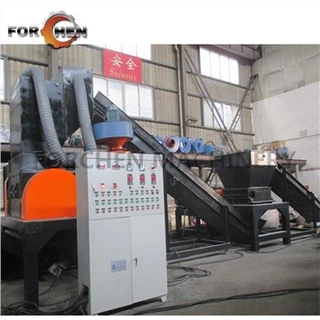
Our Factory
Henan Forchen Machinery Co.,Ltd is professional manufacturer and supplier of scrap metal and plastic recycling machine. Since establishment on year of 2000, Forchen Machinery owns sales team and production center which are located in Henan and Zhejiang province. Our factory covers area of over 20000 square meters, and it is under management of experienced team which mainly includes factory manager, technical department, production department, QC department.

FAQ
Q: What is the primary function of a wire stripper machine?
Q: How do wire stripper machines improve productivity?
Q: Can different wire gauges be stripped using the same machine?
Q: What types of insulation can wire stripper machines handle?
Q: What is the importance of precision in wire stripping?
Q: How does blade maintenance affect the performance of wire stripper machines?
Q: Are there any safety considerations when using wire stripper machines?
Q: What is the role of automation in modern wire stripper machines?
Q: What are the advantages of pneumatic versus electric wire stripper machines?
Q: Can wire stripper machines strip bundled wires?
Q: What is the typical cycle time for a wire stripper machine?
Q: What are the environmental considerations when using wire stripper machines?
Q: How do wire stripper machines contribute to quality control?
Q: What factors influence the selection of a wire stripper machine?
Q: What is the general structure of a wire stripper machine?
Q: How do wire stripper machines ensure uniform stripping across different wire batches?
Q: What are the common causes of wear and tear in wire stripper machines?
Q: Can wireless stripper machines be integrated with other automated systems?
Q: What are the typical power requirements for wire stripper machines?
Q: How do wire stripper machines handle wires with adhesive insulation?
As one of the most professional wire stripper machine manufacturers and suppliers in China for over 20 years, we're featured by good service and competitive price. Please rest assured to wholesale high quality wire stripper machine for sale here from our factory.
