

In today's increasingly environmentally conscious and resource-efficient world, the importance of recycling and effective waste management has never been more apparent.
Among the massive machinery and complex processes underpinning modern recycling, one piece of equipment stands out for its crucial role in transforming scrap metal into valuable raw materials: the metal compression machine.
Essentially, a metal compression machine is a powerful hydraulic machine designed to compress loose scrap metal into dense, easily transportable blocks, known as "bags."
This seemingly simple function is actually the cornerstone of the metal recycling industry, efficiently collecting, transporting, and processing a wide range of waste materials, from discarded car parts to industrial scraps.
By compressing these difficult-to-handle materials, balers can significantly reduce their volume, resulting in substantial benefits in space optimisation, operational efficiency, and safety.
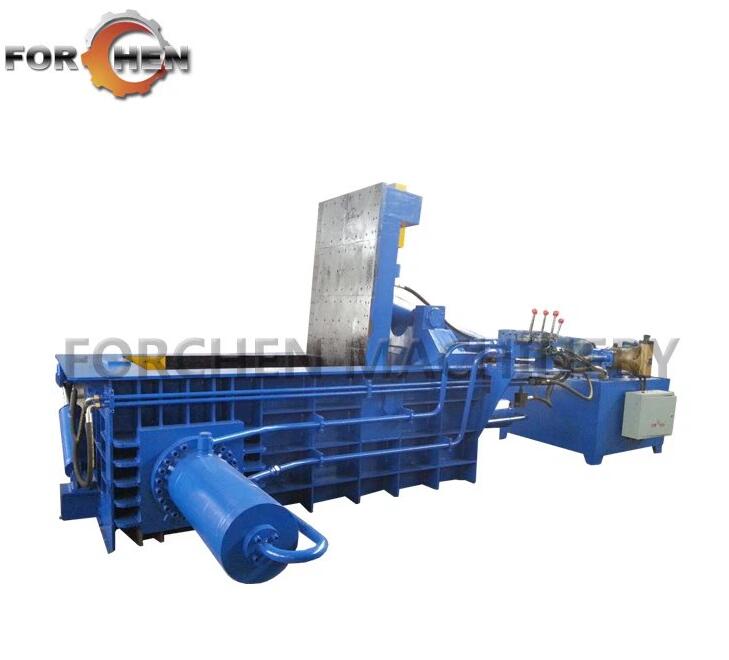
This article will delve into the world of metal compression machines, exploring their various types, essential functions, numerous advantages, and profound economic and environmental impacts.
Metal compression machines operate on the basis of hydraulic compression. Loose scrap metal is fed into the compression chamber.
Powerful hydraulic cylinders apply immense pressure, pushing material against a fixed wall or other hydraulic cylinders, gradually reducing their volume. This process continues until the metal is compressed into a compact, high-density bale.
Key elements facilitating this process include:
Compaction Chamber: The area where the metal is loaded and compressed.
Hydraulic Cylinders: The primary moving parts that apply pressure. Depending on the design (e.g., side-out, front-out), balers can have one, two, or even three hydraulic cylinders.
Hydraulic System: This system, consisting of pumps, cylinders, valves, and reservoirs, generates and controls the immense force required for compaction.
Control Panel: Allows the operator to manage the baler's functions, including loading, compaction cycles, and bale ejection.
Using scrap metal balers offers numerous advantages that benefit not only the entire recycling supply chain but also have a broader impact.
Space Optimization
One of the most direct and significant benefits is the substantial reduction in scrap metal volume. Scattered, bulky scrap metal occupies significant amounts of valuable floor space in warehouses, scrap yards, and industrial facilities.
By compressing this waste into high-density bales, balers can reduce its volume by up to 90% or more.
This optimisation frees up valuable storage space, improves site layout, and increases the utilisation efficiency of existing infrastructure.
Increased Efficiency and Productivity
Battered metal is easier and faster to handle than bulk waste. The streamlined loading and unloading process reduces the time and manpower required.
This increased efficiency directly translates into higher productivity in recycling operations, enabling the processing of more material in less time. The consistency of bale size and density also benefits the operation of automated processing systems.


