

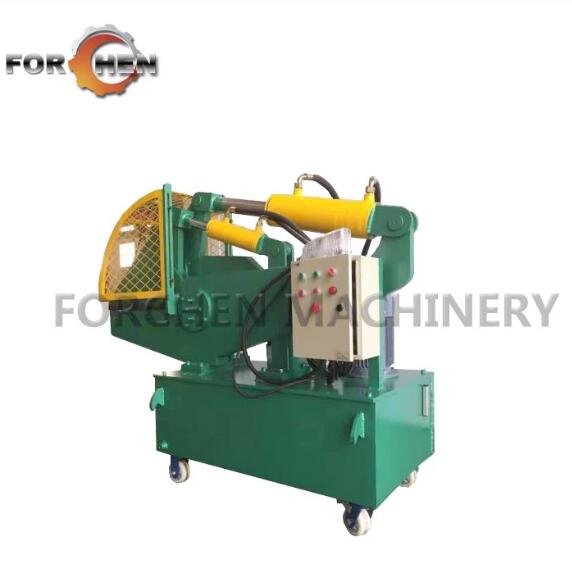
An alligator shearing machine, also known as a crocodile shear or lever shear, is a powerful and versatile piece of equipment primarily used for cutting and processing various types of metal scrap and other materials. Its name comes from the hinged jaw mechanism that resembles the mouth of an alligator or crocodile.
This robust design allows it to exert significant force to shear through tough materials. Here are the key applications of alligator shearing machines, expanding beyond the initial request to provide a comprehensive understanding:
Scrap Metal Processing and Recycling: This is the most significant application of alligator shears. They play a crucial role in preparing scrap metal for further processing, such as shredding, baling, or melting. Specific tasks include:
Size Reduction: Alligator shears efficiently cut large and unwieldy pieces of ferrous and non-ferrous scrap metal into smaller, more manageable sizes. This is essential for feeding material into shredders or balers, which have limitations on the size and shape of the input material. Examples include shearing long pieces of steel bars, pipes, profiles, and structural steel.
Material Cleaning and Separation: These machines are used to remove non-metallic components or attachments from metal scrap. For instance, they can cut off steel bands from bundles of aluminum extrusions, separate copper windings from electric motors, or remove plastic or rubber coatings from cables and wires before further processing for material recovery. This cleaning process improves the quality and value of the recycled metal.
Processing Bulky and Difficult Scrap: Alligator shearing machines can handle scrap materials that are challenging for other types of cutting equipment due to their shape, thickness, or mixed composition. This includes items like car radiators (separating copper and aluminum), gearboxes (dismantling and separating components), and gate valves.
Preparing Scrap for Melting: By cutting scrap into specific sizes, alligator shears ensure that the material fits into the furnace for the melting process in steel mills and foundries. Uniformly sized pieces also promote more efficient and consistent melting.
Cutting Rebar and Construction Scrap: In demolition and construction sites, they are used to cut reinforcing bars (rebar), steel mesh, and other metallic construction debris into manageable lengths for transportation and recycling.
Cable and Wire Processing: Alligator shearing machines are valuable in the cable and wire recycling industry for preparing these materials for stripping or granulation. Cutting cables and wires into shorter segments makes it easier to remove the insulation and recover the valuable copper or aluminum conductors.
Manufacturing and Fabrication: While primarily used for scrap processing, alligator shearing machines can also find applications in manufacturing and fabrication settings for:
Cutting Raw Material to Size: In certain low-volume or specialized operations, they can be used to cut bars, tubes, and profiles of various metals to the required lengths for manufacturing processes.
Trimming and Shearing Excess Material: They can be used to trim off excess material or flash from forged or cast metal parts.
Demolition and Dismantling: On demolition sites, they can be used to cut through metallic structures, pipes, and other materials to facilitate the dismantling process and prepare the scrap for removal and recycling.
Advantages of Using Alligator Shearing Machines:
High Cutting Force: Their robust hydraulic systems provide significant cutting power, allowing them to handle tough and thick materials.
Versatility: They can process a wide range of ferrous and non-ferrous metals, as well as other materials like cables and some composite items.
Efficiency: They offer a relatively fast and efficient method for reducing the size of scrap metal.
Ease of Operation: Compared to some other heavy-duty metal processing equipment, alligator shears are generally straightforward to operate, often with foot pedal controls.
Durability: Built for heavy-duty use in demanding environments like scrap yards, they are typically robust and long-lasting machines.


