A hydraulic scrap metal baler is a specialized machine designed to efficiently compress scrap metal into compact, regular shapes, such as rectangles or cylinders.
This process significantly reduces the volume of scrap metal, making storage and transportation more efficient. Scrap metal balers, also known as compactors, play a vital role in the metal recycling industry, packing loose scrap metal into dense, easy-to-handle bales.
The metal recycling industry relies heavily on these powerful machines to process the large volumes of scrap generated daily. Whether processing aluminum cans from municipal recycling programs or industrial scrap metal, these sturdy machines are the backbone of efficient metal recycling operations.
How does a hydraulic scrap metal baler work?
Industrial workers operate large scrap metal balers to compress shredded metal fragments in a factory setting. Scrap metal balers utilize powerful hydraulic systems to compact loose metal into bales that are easy to handle and transport. These machines play a vital role in the recycling industry, making scrap metal easier to transport, store, and process.
The operation begins with loading. The operator feeds loose scrap metal into the baler's hopper or baling chamber. Depending on the machine's setup and production requirements, this can be done manually or via an automated feed system.
Once loaded, the hydraulic system activates. A hydraulic cylinder generates tremendous pressure, pushing the ram against the metal. Hydraulic fluid transmits the force of the electric motor to the compression components.
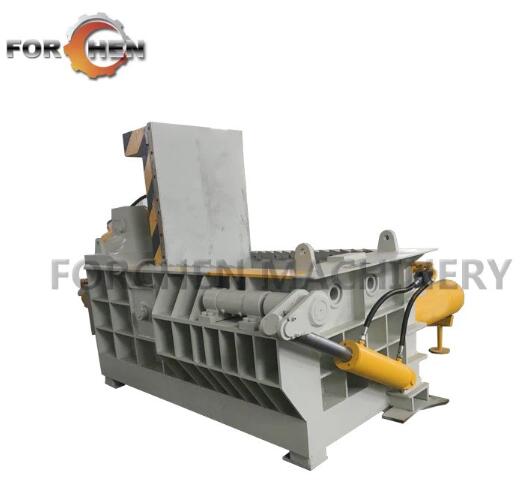
Inside the compression chamber (also called the baling chamber), the scrap is subjected to intense pressure. The ram compresses the metal from one or more directions. Some advanced models use three-sided compression to achieve maximum density.
Compression continues until the metal forms a dense mass. The baler applies thousands of pounds of pressure per square inch, compacting even the hardest metal into uniform bales for maximum transport efficiency.
A control system manages the entire baling process. Modern balers are equipped with advanced safety features, pressure monitoring, and automatic cycling. These systems ensure consistent bale density while protecting the operator.
Once compression is complete, the finished bale is ejected from the machine. The dense metal mass is now ready for transport to a processing plant. Some balers feature automatic ejection systems, while others require crane assistance.
The hydraulic system is the heart of any scrap metal baler, capable of withstanding extreme pressures while maintaining precise control. High-quality balers feature durable sealing components that can withstand high pressure and high temperatures.
The entire baling process typically takes only a few minutes. This high efficiency enables recycling facilities to quickly process large quantities of scrap metal. Continuous-feed models can even handle higher throughput requirements.
Different types of scrap require specific baler configurations. Ferrous metals (containing iron) require more powerful hydraulic systems than non-ferrous metals such as aluminum. The baler's design should be tailored to its intended use.